
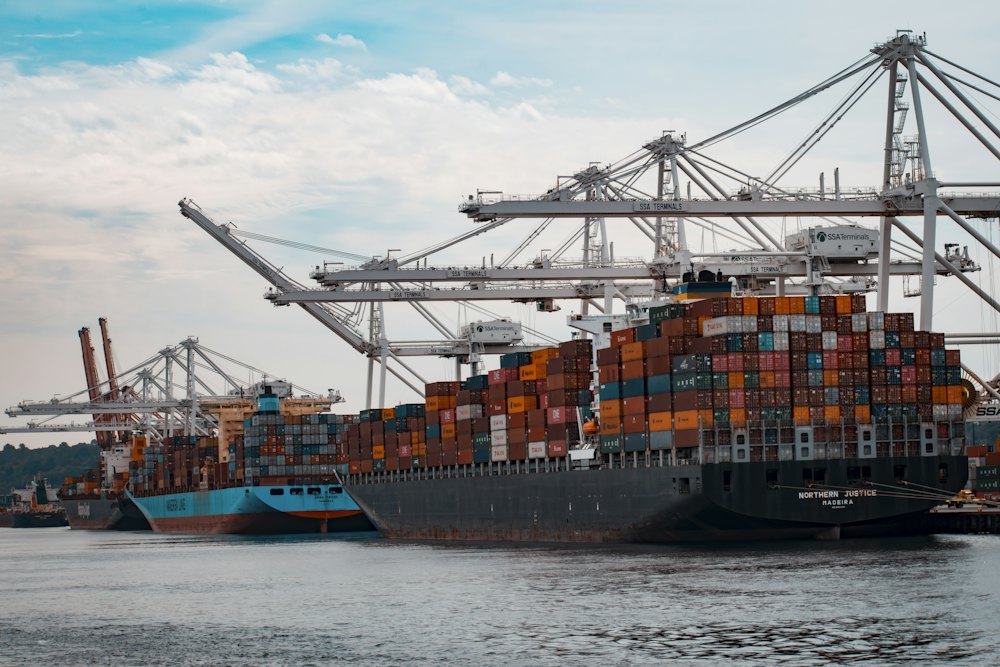
Shipping Knitwear from China: Freight, Duties and Incoterms for Sweater Importers
How sweater orders actually move: sea vs air freight costs and transit, which Incoterm protects you, HS 6110 duty basics, and the packing rules that prevent damaged knitwear.
You have agreed the price, approved the sample and paid the deposit. Now the part that decides whether the order is profitable: getting the sweaters from the factory to your warehouse without the freight bill or the duty assessment eating the margin. Here is how knitwear logistics actually works.
How Knitwear Leaves China
| Method | Transit time | Best for | Relative cost |
|---|---|---|---|
| Sea freight (FCL) | 25–45 days | Full container volumes | Lowest per unit |
| Air freight | 3–8 days | Sample sets, urgent reorders | Highest per unit |
| Rail to Europe | 18–25 days | Mid-urgency EU orders | Between sea and air |
Knitwear is bulky but light, which is the single most important fact for your freight strategy. Sweaters cube out before they weigh out: you pay for volume, not kilos. That makes compression packing and carton optimisation more valuable than weight negotiation.
Sea vs Air: The Real Trade-Off
Sea freight is the default for bulk orders and the only method that keeps unit economics sane on a large run. Air freight exists for three legitimate reasons: sample sets that must be approved quickly, reorders that missed the production window, and high-value/low-volume luxury pieces where the freight percentage is tolerable.
The trap to avoid: treating air freight as a fix for late ordering. An order placed two months late and shipped by air turns a healthy margin into a break-even exercise. Booking production early is cheaper than any freight method.
Incoterms: Which One Protects You
Incoterms are pre-defined commercial terms published by the International Chamber of Commerce (ICC) that define the responsibilities of exporters and importers in arranging shipments and transferring liability. They communicate the tasks, costs and risks associated with international transport and delivery.
The four you will actually see on knitwear quotes:
| Term | Who arranges freight | Risk transfers |
|---|---|---|
| CIF | Seller | Same point, but seller pays freight and insurance |
| FCA | Buyer | When goods are handed to the carrier |
| DDP | Seller | At your destination, duty paid |
Important detail on FOB: FOB is only used in non-containerized sea freight or inland waterway transport. If your shipment is containerized — which most knitwear is — FCA is technically the correct term. Many factories still quote FOB out of convention; what matters is that you and the supplier agree in writing where cost and risk transfer.
Also worth knowing: Incoterms do not define when ownership of goods transfers. Ownership is defined by the contract of sale and the bill of lading or waybill — not by the Incoterm.
Duty Basics: HS 6110
Sweaters and pullovers are classified under HS heading 6110. Three things drive your duty rate:
1. Fibre composition — wool, cotton and synthetic knits sit at different rates
2. Destination market — US and EU rates differ, and both differ from UK and Canada
3. Trade agreements — preferential rates may apply depending on origin documentation
Confirm your specific category and destination rate before you set retail pricing, not after the goods land. A duty surprise at the border arrives too late to change your price.
Packing: Where Knitwear Gets Damaged
Sweaters travel poorly if packed carelessly. The failures that show up as customer complaints:
- Compression creasing — over-compressed cartons create permanent fold marks in wool
- Moisture damage — cartons shipped without desiccant in humid conditions grow mildew
- Hanger deformation — garments shipped on hangers arrive with stretched shoulders
- Carton crush — stacking strength matters more than carton thickness
Specify flat-folded packing with tissue interleaving, desiccant in the carton, and a stated stack limit. Ask for a photo of the packed carton before shipment — a two-minute check that prevents a warehouse full of creased stock.
FAQ
How long does shipping take from China to the US or EU?
Sea freight typically runs 25–45 days port to port, plus customs clearance and inland delivery. Air freight is 3–8 days. Rail to Europe lands between the two at roughly 18–25 days.
Should I use FOB or DDP for sweater imports?
FOB (or FCA, if containerized) gives you control over freight and usually the best rate, but requires you to arrange logistics. DDP is simpler — the supplier handles everything including duty — but you pay a premium for that convenience and lose visibility on the freight cost.
What HS code applies to sweaters?
Knit sweaters and pullovers fall under HS heading 6110. The exact subheading depends on fibre composition, and the duty rate depends on both the subheading and your destination market.
How do I prevent sweaters arriving creased?
Specify flat-folded packing with tissue interleaving rather than tight compression, state a carton stack limit, and request a packing photo before shipment. Compression creasing in wool can be permanent.
Sources
- Incoterms rules and FOB definition (International Chamber of Commerce) — responsibility, cost and risk transfer; FOB applies to non-containerized sea and inland waterway transport
- HS 6110 knitwear classification (World Customs Organization harmonized system)
The Bottom Line
Knitwear logistics rewards planning over reaction. Book production early so sea freight remains an option, agree your Incoterm in writing, confirm the HS 6110 subheading and duty rate before setting retail price, and specify packing that survives the journey. Three of those four cost nothing but attention.
LINFAIR ships knitwear worldwide from Dalang, Dongguan with FOB and CIF terms, photo and video QC at every stage, and packing specified to your destination requirements. Ask us for a freight-inclusive quote on your next order.

Interested in Working With Us?
Whether you have a specific project in mind or just want to explore possibilities, we would love to hear from you.