
Why Your Sweater Pills (And What Actually Works to Stop It)
Pilling is the number one complaint about knitwear. But most advice online is wrong. Here is what actually causes pills, and what genuinely helps.
You bought a nice sweater. Two weeks later, little fuzz balls appeared under the arms and along the sides. Annoying? Absolutely. Inevitable? Not entirely.
A lot of advice about pilling floats around the internet, and honestly, most of it is half-right at best. Let me break down what actually happens and what you can realistically do about it.
What Pilling Really Is
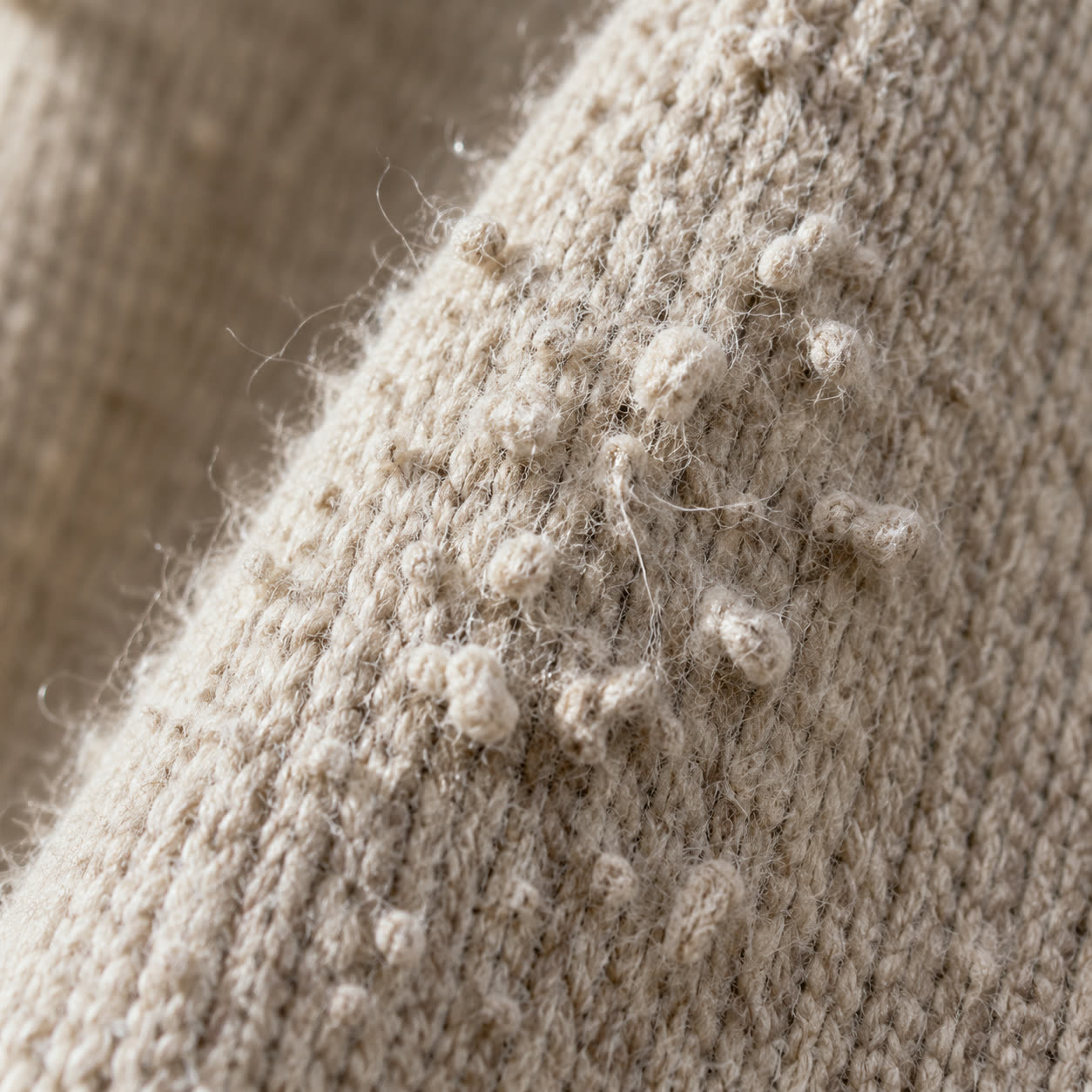
Pilling happens when short or broken fibers tangle together and form little balls on the surface of the fabric. These are not defects — they are a natural consequence of friction. The underarm area of a sweater rubs against your body dozens of times per day. The sides rub against bag straps, seatbelts, desk edges. Every point of contact is a chance for fibers to break and tangle.
Here is the part most people miss: pilling is actually more common in higher-quality, softer yarns. Cashmere pills more than coarse wool. Fine merino pills more than chunky acrylic. The softer the fiber, the easier it breaks, and the more likely it is to pill. So if your expensive cashmere sweater is pilling, that does not necessarily mean it is low quality — it means it is doing what soft fibers do.
What Does NOT Work
Let me save you some money:
Fabric shavers with rotating blades. These cut the pills off, yes, but they also cut healthy fibers. Over time, you are thinning the sweater. Each shave removes a little bit of yarn along with the pills. Use one too often and the fabric gets visibly thinner.
Tape lint rollers. They pick up loose fibers but cannot grab established pills that are anchored into the knit. A waste of tape.
Freezing the sweater. I have seen this tip everywhere. The idea is that cold temperatures "set" the fibers. There is zero scientific basis for this. It does nothing.
What Actually Works
1. A Cashmere Comb
This is the single best tool for knitwear. A cashmere comb is a small, flat comb with fine metal teeth. You lay the sweater flat and gently comb over the pilled areas. The comb catches pills and pulls them away without cutting the surrounding fibers. It costs about $8 and lasts forever. If you own more than two sweaters, buy one.
2. Anti-Pilling Treatment
Some modern knitwear is treated with an anti-pilling finish during manufacturing. This is a process that bonds the fibers more tightly, making them less likely to break and tangle. LINFAIR uses this technology across its cashmere blend collection. It does not make pilling impossible — nothing does — but it significantly reduces how often it happens and how severe it gets.
3. Wash Inside Out
When you wash a sweater, the agitation causes fibers to break. If you turn the sweater inside out first, the broken fibers end up on the inside rather than the outside. Simple, free, and effective.
4. Give It a Rest
Sweaters need recovery time. Wearing the same sweater three days in a row means constant friction without any chance for the fibers to recover. Rotate your knitwear — give each piece at least 24 hours between wears. This alone will noticeably reduce pilling.
The Honest Truth
No sweater will never pill. If a brand tells you their sweater is "100% pill-free," they are lying. What you can do is manage it: buy knitwear with anti-pilling treatment, use a cashmere comb instead of a shaver, wash inside out, and rotate your sweaters.
Pilling is not a sign that your sweater is falling apart. It is a sign that you are wearing it. Treat it right, and it will look good for years.
Interested in Working With Us?
Whether you have a specific project in mind or just want to explore possibilities, we would love to hear from you.